Wednesday, October 17, 2018

DIS Introduces New Double Head Wireless Ultrasound Probe

Diagnostic Imaging Systems is pleased to announce the arrival of yet another technological marvel for the veterinary market – the new Double Head Wireless Ultrasound Probe. This ultrasound represents the latest in a long line of innovations brought to market by DIS, emphasizing their commitment to the continued advancement of digital imaging technologies at prices any veterinary practice can afford.
Now, veterinarians have the ability for close-to-surface imaging applications, such as, checking tendons on horses, and then quickly moving to abdominal organs such as kidneys, liver, spleen, bladder, and heart, with one Handheld Wireless Ultrasound Scanner. This scanner is equipped with a 3.5MHz/5MHz convex probe with a depth of 100mm~280mm and 7.5 MHz/10.0MHz linear probe with a 20mm~55mm depth.
“The image quality is great and the probe transmits the images wirelessly to any computer or tablet running Windows, Apple iOS, or Android operating systems,” states Scott Hecker, Sales Manager.
The cost savings are significant since prior to the availability of this new ultrasound, veterinarians would have to purchase two separate probes in order to have the functionality of this one. This scanner is perfect for in-clinic or in the field, as it comes with a hard carrying case and belt clip so you can carry it with you at all times.
For more information and pricing please contact Diagnostic Imaging Systems at 800-346-9729 or email them at Scott@vetxray.com.


###
About Diagnostic Imaging Systems: Diagnostic Imaging Systems, Inc. (DIS) is a family owned and operated manufacturer and supplier of quality imaging products at the best possible price and price match guarantee. DIS products are specifically designed and engineered to match your specific needs. They combine over 35 years of industry knowledge with an understanding of your needs, to keep x-ray simple, so you can spend more time effectively managing your practice.

Tuesday, July 24, 2018

Horse Facts

It’s summertime.  No more teachers, no more books.  No reason not to catch up on some interesting horse facts during the sultry summer months.

Classification
They are a subspecies of the family Equidae
The correct Latin name for the horse is Equus ferus caballus
They are an ungulate mammal which means "hooved" animal
They evolved from a small multi-toed creature to the horse we know today over the last 50 million years
Horses were first domesticated around 4500 BC
Horses are prey animals that rely on speed to escape from predators
They are also herd animals who rely on safety in numbers and require social interaction with each other
There are over 300 different breeds of horses

 Age
You can tell the age of a horse by examining his teeth
Domesticated horses have an average life expectancy of 25 to 30 years
Foal is the term that describes a male or female horse that is less than one year old
Yearling is the term that describes a male or female horse between one and two years old
A mare is a female horse that is four years or older
A filly is a female horse that is under four years old
A stallion is a male horse that is four years or older
A colt is a male horse that is under four years old
A gelding is a male horse that has been castrated

Size
Horses are measured in hands - one hand equals 4 inches
The measurement is taken from the ground to the top of the withers
"Pony" is the term generally used to describe an animal that measures 14.2h or under
"Horse" is the term used to describe an animal that measures over 14.2h
Miniature horses measure in at less than 30"

Colors
  • Bay - body color ranges from light reddish-brown to dark brown and the legs, tail and mane are black
  • Brown - body color ranges from light reddish-brown to dark brown
  • Chestnut - body color ranges from light reddish-brown to dark brown with no black point.
Mane and tail are the same shade or lighter
  • Grey - can range from white to dark grey but all have black skin
  • Black - coat, mane and tail are all black
  • Buckskin - cream coat with black legs, mane and tail
  • Dun - cream coat with black legs, mane and tail plus black stripe along spine
  • Cremello - very light cream coat and most often with blue eyes
  • Leopard/Appaloosa - horse has spots, mottled skin around the eyes, lips and genitalia and also has a white sclera of the eye
  • Palomino - golden, yellow or tan shade with flaxen or white mane and tail
  • Pinto - multi-colored horse with large patches usually either brown and white or black and white
  • Roan - has white hairs evenly intermixed with body color and solid-colored head
  • White - very rare and has white coat with pink skin

Reproduction
Pregnancy lasts for approx 335-340 days
Foals are able to stand and run within a very short time after birth
Horses are considered mature at around four years old but their skeleton doesn't finish developing until they are around six

Anatomy
Horses have 205 bones in their skeleton
Horses have a special locking mechanism in their legs which enable them to sleep standing up
Digestion
Horses are herbivores which means they only eat plants
They have a small stomach so require a steady flow of food throughout the day and night
They require approx 2 percent of their body weight in food per day
A 1,000 pound horse require approx 10-12 gallons of water per day
Senses
Horses have the largest eyes of any land mammal and have excellent day and night vision
Their range of vision is 350 degrees with two small blind spots, one directly in front and one directly behind them

Their ears can rotate up to 180 degrees to provide 360 degree hearing without having to move their head


The content is not medical advise, nor is it intended to be a substitute for veterinary treatment or care. First, consult with your veterinarian before use.

Tuesday, July 10, 2018

Keep Your Pet Safe This Summer

It’s summertime, summertime, sum, sum, summertime!

Here are some tips to guarantee you and your pet a happy and safe summer together:

Never Leave a Pet in a Car Alone
Why, with so much media attention, do owners continue to leave their pets in cars?  People just don’t realize how fast things can go terribly wrong.

According to AVMA, the temperature in a hot car can rise 20 degrees in just 10 minutes. Another 20 minutes, another 10 degrees.  So if it’s 80 degrees outside, and the interior of the car is already at 70 degrees, after just half an hour, your pet is in a 100-degree environment.

The bottom line – if you are making multiple stops at multiple locations, drive solo.  Your dog will bark “thanks.”

Make Sure They Have Shade & Lots of Water

While we humans enjoy a day in the sun, we understand the need to protect ourselves from harmful rays.  Our pets need protection, too. Make sure your pet has a shady spot if your summer fun includes having her outside for an extended period of time.  FACT: Dogs are prone to skin cancer, especially of the ears and nose.  Skincancer.org suggests sunscreen and UV-protective clothes

Always provide plenty of fresh water.

If your dog joins you for regular runs- enjoy! Just remember that summer heat can be dangerous for your dogs. Only run early in the morning or late in the evening to avoid the stifling midday heat. Check the pavement, road, or sidewalk you’ll be running on by placing your hand on the ground. If it’s hot to the hand, it’s hot to the paws.

Consider a plastic pool and let your pal play in the cool water. 

Recognize Heat Exhaustion

Heavy panting, dry or bright red gums, thick drool, vomiting, diarrhea, or unstable legs require quick action.  Dip his body in cool (not cold) water. No tub? Drape a cool (not cold) damp towel over his body, and re-wet as needed. Massage his legs to help with circulation. Provide lots of drinking water.  Call your veterinarian immediately.

ID Tags

With all that added outdoor time, summertime can lead to a pet wandering off.  Make sure your pet’s ID tag is up to date with your current phone number. If your pet is microchipped, make sure your information is up-to-date with the host company.   Tags and microchips offer the best chance of reuniting pets and owners

Plenty of Parasites

Summer equals an increase in the bug population.  Make sure to use a flea treatment recommended for your pet’s age and overall health.  If your pet spends a lot of time outside during the summer, routine baths and bedding washes will ensure no flea friends make their way into the house.

Tick, tick tick.  And we don’t mean clocks. Frequent inspections, combing and paw checks will help you stay on top of any bites that may occur.

Public Enemy #1-Mosquitoes!  They can carry infected larvae which can turn into heartworms. Heartworms can be detrimental, even deadly to your pet.  Be sure to ask your vet about which heartworm preventive is best for your pet.

Summertime is our favorite time; you want to include your pet in the fun.  As long as you keep your furry friend’s health and safety top of mind, you’ll both shine this season!


The content is not medical advise, nor is it intended to be a substitute for veterinary treatment or care. First, consult with your veterinarian before use.

Tuesday, June 26, 2018

RVing: Not Just For Humans Anymore

Headed to the Grand Canyon?  Maybe it’s the Delmarva Coast for fun at the beach. For many of us, there’s no question about bringing the 4-legged family member along for the vacation.  Before you begin, think back to the day you brought him/her home.  Plan on a period of adjustment to the smaller spaces, the unfamiliar noises and everything else that comes along with RVing.  We’ve put together a list of helpful tips to make the trip as much fun for your furry friend as it is for you. 

  1. Get your pet acquainted with the RV a few days before leaving by
    1. bringing him/her inside and letting him explore the space on his/her own.
    2. having pet bowls, litter box, toys, etc set up as it will be on the road so they can get familiar with where those things will be.
    3. taking them on a quick ride to introduce them to the motion and sounds of an RV.
  2. Plan for plenty of stops for your pet when traveling. Consider a pet pen that you can set up at each stop that will allow some time for exercise, a breath of fresh air and no leash. Keep a leash handy for walks and bathroom breaks. 
  3. Bring your pet’s favorite items from home such as treats, toys, beds and blankets. The familiar items and scents will help them better adjust to life on the road.
  4. Make sure your pet is up-to-date with vaccinations before departing. Have all paperwork available and organized. You may travel in areas that could expose them to new illnesses and viruses. Talk to your vet before leaving about any appropriate additional preventative measures.
  5. When planning a trip, make sure to book at a pet-friendly campground. There are plenty of online resources (state specific, AAA, etc.) to aid in your search.
  6. Be mindful of the weather, especially in extreme climates like the desert or mountains. Your dog or cat can get overheated or chilled quickly, so watch them closely and find ways to help keep them comfortable and healthy.
  7. Consider finding the closest pet care facility to your campground in case of health emergencies, and make sure they have a proper ID tag attached to their collar in case they wander off.

Try to stick to the normal routine when it comes to meals, walks, bedtime, etc.  Pets are creatures of habit and will adapt to a new space quicker if simple schedules are kept the same.
The above tips are some tried and true methods of keeping your pet happy and healthy along the way, but they are certainly not the only approaches RVers have come up with to help pets adjust. Each pet has a different personality, and with these tips, you and your pet partner will enjoy life motoring down that lonesome highway.


The content is not medical advise, nor is it intended to be a substitute for veterinary treatment or care. First, consult with your veterinarian before use.

Friday, June 22, 2018

Dog Bellies - To Rub or Not to Rub

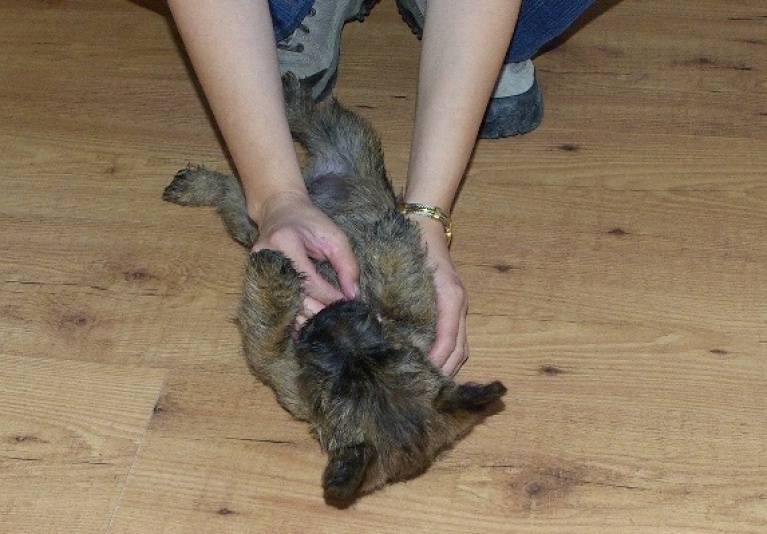
Every dog owner and dog lover has seen a dog go nuts at having their belly rubbed.  If you have a dog that can’t resist a belly rub, it might interest you to know there are actual scientific and behavioral reasons behind it.

What is your dog showing when he requests a belly rub?

Your dog displays certain behavioral traits by asking for a belly rub. 


Here is what’s really happening:

Ecstasy
Of course, you knew this but it’s always nice to know for sure.  The kicking of the legs, the goofy, funny expression on their face and the absolute bliss demonstrated by your dog spells it out clearly.  Just like human nerves and neural connections are stimulated during a massage, your dog gets the same pleasure.

Science
Science also plays a role in why your dog likes tummy rubbing, and his appreciation for the rub is linked to the reasons he enjoys all types of petting. According to centralbarkusa.com, dogs have a specific brain neuron that responds to the stimulation of hair follicles which means when you rub his tummy, the stroking of his tiny belly hairs is actually providing a specific type of stimulation in your dog’s brain. This neurological stimulation is only possible through stroking, which makes petting, like belly rubs, uniquely satisfying.

Loyalty & Submission
Dog owners and Dog lovers know this –a dog allowing you to rub their stomach is a dog showing they feel a special connection with you.  Dogs are generally vulnerable in the rolled over the position.  This position can cause them to compromise their authority among other animals, and allow others to take over.  When a dog allows you to rub their belly, they’re showing they trust you completely. It is also an offering of love and connection.

Everyone knows dogs are the most loyal friends you can ever have. And they display it in different ways. One of the ways a dog restates his loyalty to you is by asking for a belly rub.

Because a belly rub signifies a special connection and level of trust between a dog and its owner, asking for a belly rub is also a sign of loving submission and loyalty. They want you to know they trust you and are ready to be vulnerable with you.

How to give your dog the perfect belly rub—do’s & don’ts
While a belly rub should always be administered if a dog is asking for one, there are some important dos and don’ts as well.

Never be too forceful
Studies show that if a dog rolls over on his back to offer you his belly, this is a sign of trust. But if a dog rolls over on his back instantly as soon as you walk closer, it is not a sign of trust but a sign submission which can be slightly different.
In such an instance, make the dog feel comfortable and regain his trust by talking to him –but don’t belly rub.

Be sure the dog is comfortable
It is important to check if your dog is enjoying the belly rub.  You will notice dogs often tend to viciously kick their legs while getting a belly rub. And this may lead you to believe this is an ecstatic response and increase your intensity of belly rubs.

However, this is not always true. Dogs kick their legs during a belly rub out of a physiological response that originates out of the tickling sensation they are experiencing. It is something involuntary and not in their control. So it is always important to check if the dog is still feeling comfortable with a belly rub and you are not over-doing it.

No roll over...no belly rub
And lastly, if the dog is not rolling over on its own, don’t force him or her.    In other words, the dog makes the call!


The content is not medical advise, nor is it intended to be a substitute for veterinary treatment or care. First, consult with your veterinarian before use.

Wednesday, March 28, 2018

Stress-Free Moving—Pet Style

According to University Hospitals of Cleveland, OH, moving ranks in the Top 5 stressful events that we will face.  But moves can be stressful for our pets, too. If you feel anxious, your pet may mirror that emotion and become extra sensitive.  Some pets will absorb their caregivers' emotions: if you feel anxious, they may be jumpy and extra-sensitive; if you feel frenzied, they may feel insecure. Out of control?  They may want to stay in bed or run under a bed.
Pet transition tips & tricks


Bring favorites. New home equals new bed, new toys, new collar, etc...right?  Wrong!  Pack a pet's favorite bed, crate, toys, food and water dishes, treats and more. Try to place them in the same places as they were in your previous home. Familiarity will help your pet feel in control and at home more quickly.

Be consistent. Keep to the routines your pet has come to expect for feeding, walking, playtime and bedtime. If your dog or cat is used to roaming the property untethered, consider a short-term leash for safety and to help them become familiar with the new boundaries.

Maximize safety. During the packing stage, the actual move and the transition in the new home, plan for your pet's safety. Some animals will be upset and scared once the boxes and suitcases take over familiar areas. They may hide or run away. Set aside a safe place where they can't get lost or hurt. Make sure your pet has identification and your contact information, and that you have copies of veterinarian records. Learn about any aggressive animals or risks in the new home, yard and neighborhood

Minimize anxiety. Beer or wine won’t work.  Some animals just need to be near you no matter what you're doing. Others may do better away from the moving madness. Consider a “safe room” or a little pet vacation away from home.   The more secure they feel, the better they'll ride out the craziness.
Most of all...

Be patient. Give them time.  Let them sniff around, and safely explore.  It’s OK if they want to hide for a while, as long as they remember the relief rules.  Promise—they’ll come out when they are ready.  Be prepared to accept their behavioral changes, including eating, barking, spraying, etc.  Yes, there may be some short-term “potty" issues.  You may see a little more protection mode.   Just like you, they need time to get used to their new home

Give ‘em a whole lotta love. A bit of extra loving will go a long way as they come to feel at home in their new surroundings. Unexpected or unwanted behaviors are likely the result of uneasiness with the change.   Difficult behaviors don't mean the pet is bad and can't change. This, too, shall pass.  Take a breath and remember all of the love of a few days ago.  Take a breath, have a seat and remember that this is all temporary.  Soon, all will be right in your home sweet home.


The content is not medical advise, nor is it intended to be a substitute for veterinary treatment or care. First, consult with your veterinarian before use.

Monday, February 26, 2018

The Whys and Wherefores of Cat Color Changes

It’s a day like any other day, except that your once cream-colored cat has taken on a brownish tone. Don’t panic, just yet.   Skin and hair color is determined by melanocyte cells in the skin and hair follicles. Those cells produce melanin which in turn produces the color. Remember what you looked like last summer; after a day at the shore? When your skin is exposed to the sun, those cells are stimulated to produce more melanin. But what can cause color changes in your cat?
 Genetics
Cats come in a kaleidoscope of colors; or lack pigment altogether in the case of albinos.    In fact, did you know that the coloration patterns in “pointed” breeds of cats (Siamese, Ragdoll, Balinese, etc.) are temperature dependent? The production of the pigment is dependent on the action of a particular enzyme and the action of that enzyme is temperature dependent. That’s why the warmer parts of a Siamese cat’s body are lighter in color while the cooler parts (like the face, feet, tail and ear tips) are more darkly pigmented.  The scientific name is Wilson’s Syndrome, according to technology.org.
Environment
Given the temperature dependent color of pointed breeds, they are especially prone to color changes associated with temperature variations that stretch out over time. Move to Arizona and you’ll likely see the points turn lighter.   And be prepared for coat color changes if your animal is shaved for surgery.  The first hair re-growth, on less insulated skin will likely be darker; subsequent hair growth should return your pet to the original color.  (Medical, Genetic & Behavioral Risk Factors of Siamese Cats by Ross D. Clark DVM)
Black cats often turn a reddish color when exposed to the sun.  If you fear it’s something more, have your vet run tests to determine if their diet is deficient in amino acids or something else.  Diet deficiencies are easily reversed with the right food balance.
Diseases
Vitiligo is a hereditary disorder in cats that causes white areas to appear as the cat matures. These spots typically occur around the nose and eyes, but are not cause for alarm.  Color changes have been reported in cats post-stressful situations (pregnancy, serious illness).   For more information related to diseases in cats, see peteducation.com

As a rule, pigment changes in your cat are most likely due to benign conditions that do not cause serious consequences to your cat’s overall health. However, underlying illness or poor nutrition needs to be addressed.  Your veterinarian will ask you questions as part of your cat’s evaluation.  Diagnostic tests may be necessary and, should the problem be more than benign, the owner and the doctor should respond appropriately.

If you have any questions or concerns, you should always contact your veterinarian — she or he is your best defense to ensure the health of your pet.


The content is not medical advise, nor is it intended to be a substitute for veterinary treatment or care. First, consult with your veterinarian before use.

Tuesday, February 20, 2018

Today - February 20th is National Love Your Pet Day


Break out the treats.  Head to the pet store.   Visit the local shelter.  Today is National Love Your Pet Day.   The purpose of this holiday is to encourage pet owners to spend some time with their pets and show them the love and affection they deserve.  Dogs, cats, turtles, lizards, fish; it doesn’t matter.  It’s the day to show them just how much they mean to you.

No one knows exactly when it started but according to our research, wide-scale celebration began in the early 2000s. 

The stats will surprise you

In 2017, U.S pet owners spent almost $70 billion dollars worth of products for their pets (American Pet Products Association).  Compare that to the $41 billion spent in 2007. Want to know more about the pet industry in the United States? Then check out the following pet statistics:

Number of Households That Own a Pet (By Type. In Millions)
Dogs:     60
Cats:      47
Fish:       14.2
Birds:     8.0
Reptile: 4.7
Horses: 2.6

Number of Animals Owned in U.S (In Millions)
Fish:       158.8
Cats:      94
Dogs:     90
Birds:     20.4
Reptiles: 9.4
Horses: 7.7

The benefits will blow you away

Strengthen a child’s immune system  ̶ Studies have shown that children who live in homes with pets miss less school due to sickness than children who grow up in pet-free homes.

Lessen the chance of developing allergies Contrary to outdated myth, children in households with pets are reported to have fewer allergies.  Nowadays, several studies have shown that children in pet-friendly households lower the chances of developing related allergies by as much as 33% (National Institute of Health). You’ll want to introduce the kids to the animals as soon as possible.  If a person has already developed an allergy, the allergy can’t be reversed. 

Heart health—Another benefit to owning a pet may be improved heart health.  Studies have shown that owning a pet can lower blood pressure, triglyceride and cholesterol levels; all are contributors to the risk of heart attack

Overall fitness—This one’s so obvious.  You walk your dog 3X daily; you walk off excess weight and boost your metabolism.  The pooch is happy and you get healthy.  Win-Win! 

Don’t worry; be happy—Yes, they can be expensive.  Certainly they can be a pain in the neck.  In spite of it all, pets have been shown to turn a bad day into a beautiful one.  That’s why their presence in hospitals, nursing homes and long-term care facilities is ever-rising.   

Make new friends, keep the old—Pets are instant icebreakers; people are just more willing to stop and chat when they see a person out with their pet.  And you’d be amazed by how often friends stop by for pet play dates.  Just one more reason to make a dog, cat, reptile or bird a part of the family. 

Celebrating National Love Your Pet Day

Stop by your local pet adoption center.  Volunteer, foster or adopt.  Animals provide love and companionship each and every day.  February 20th is your chance to return the favor. 

Monday, January 29, 2018

Paying Off Loans: What Every Veterinarian Needs To Know

A veterinarian’s main concern is caring for animals. Pet owners, animal lovers, and farmers depend on these specialists to uphold animal health and well-being. Government relies on vets for research into disease, food safety and drugs. 

The last thing the student or newly-graduated vet wants to think about is paying back loans. 
Much like human medical school, veterinary school costs are staggering.  According to the American Veterinary Medical Association (AVMA), 2016 veterinary graduates have a mean student debt of $141,000. 

Fortunately, there are programs that can help with educational debt—veterinary student loan forgiveness and repayment programs.  Here are just a few to consider:

U.S. veterinary student loan forgiveness and repayment programs

The U.S. Dept. of Agriculture’s Veterinary Medicine Loan Repayment Program (VMLRP), authorized by the National Veterinary Medical Services Act (NVMSA), helps qualified veterinarians offset a significant portion of the debt incurred in pursuit of their veterinary medicine degrees in return for their service in certain high-priority veterinary shortage situations.

To receive this award, you must agree to serve at least three years in a region with a veterinarian shortage. The type and amount of work you do for the yearly award depends on the area where you work. Note that this program focuses primarily on veterinary medicine for livestock raised for food.
 You may receive up to $25,000 of your student loan debt per year. 

For more info:  nifa.usda.gov

State-by-state veterinary student loan repayment assistance programs
Some states (not all) offer repayment assistance.  Note that even in states where legislation was enacted to establish these programs, funding needs to be appropriated. You’ll need to contact the specific programs to find out if they are currently funded and operational.

For more info: avma.org

Army Health Professions Loan Repayment Program
The Army offers a loan repayment program for a variety of health professionals, including veterinarians. Both active duty and reservists are eligible. 

If you are on active duty, you can receive up to $120,000 over three years through the Active Duty Health Professions Loan Repayment Program. If you’re in the reserves, you can receive $50,000 in student loan repayment over three years.

For more info:  military.com OR goarmy.com

Faculty Loan Repayment Program

The Health Resources and Services Administration (HRSA) offers loan repayment to those interested in pursuing a career as a faculty member at a health professions school.  The Faculty Loan Repayment Program (FLRP) helps recruit and retain health professions faculty members by encouraging students to pursue faculty roles in their respective health care fields.

Loan payment assistance up to $40,000; Funding to offset the tax burden may be possible.

For more info:  bhw.hrsa.gov

Public Service Loan Forgiveness

The Public Service Loan Forgiveness (PSLF) Program forgives the remaining balance on Direct Loans after you have made 120 qualifying monthly payments under a qualifying repayment plan while working full-time for a qualifying employer.  Eligible jobs are available for veterinarians in government, nonprofit, and military organizations.

For more info:  studentaid.ed.gov

Veterinary medicine is a fulfilling career; the chief reward is the contribution to animal health.  We suggest that you explore all repayment options, including private funding and debt consolidation.


Tuesday, January 2, 2018

The Wonderful World of Wildlife Rehabilitation – Part I

There’s so much more to being a wildlife rehabilitator than a simple love of wildlife.  Wildlife rehabilitators provide treatment and care to injured, sick or orphaned native species until they are well enough to be released.

Responsibilities
According to the National Wildlife Rehabilitators Association (NWRA), the primary duty of a wildlife rehabilitator is to examine injured wildlife and provide medical care and therapy to help them recover to the point at which they can be released. Typical duties may include feeding, cleaning cages, record keeping, accounting, fundraising, answering phone calls about injured animals and educating the public.
The wildlife rehabilitator should have a good working knowledge of wound management, fluid treatment, the nutritional needs of various species, and humane restraint and capture procedures.
Depending on their geographic location, rehabilitators may work with many species including deer, raccoons, woodpeckers, eagles, hawks, pelicans, herons, turtles, snakes, seals, hummingbirds, ducks, owls, bats, frogs, ferrets, geese, and swans.
Career Options
Wildlife rehabilitators can work for various governmental agencies, nonprofit groups, zoos, and humane societies.  They may also have another primary occupation, working as a veterinarian, veterinary technician, zoologist, or biologist.
Rehabbers can elect to specialize or work with a variety of species.  Some rehabilitators are involved with specialized emergency response teams that travel to areas where animals are in distress. The areas to which they are dispatched often include locations affected by oil spills, hurricanes, or wildfires.
Here’s a bullet list of the career opportunities available for wildlife rehabbers, courtesy of the International Wildlife Rehabilitation Council:

  • Wildlife rehabilitators
  • Marine mammal strandings
  • Education Coordinators
  • Wildlife Rehabilitation managers
  • Volunteer coordinators
  • Museum educators
  • Raptor rehabilitators
  • Animal care technicians
  • Nutritionists
  • Wildlife educators
  • Oil program coordinators
  • Animal hospital managers
  • Veterinary directors
  • Veterinarians
  • Veterinary technicians


Training & Licensing
Wildlife rehabilitators must be licensed by the state and/or federal government to work in the field. There are many rules governing the care and capture of wildlife. You will need to get in touch with the appropriate agency to obtain the necessary permits. The best place to start seeking advice on the permit issue is generally the U.S. Fish and Wildlife Service.
Many wildlife rehabilitators have a degree in biology, animal behavior, animal science, or zoology; though a college degree is not required to work in this field. They also usually initially intern with experienced wildlife rehabilitator to gain a good foundation of hands-on experience. Volunteering with a wildlife veterinarian or at a large wildlife rehabilitation facility is also a great way to learn.
The International Wildlife Rehabilitation Council (IWRC) offers professional certification to those who pass the Certified Wildlife Rehabilitator (CWR) exam. Recertification is required every two years and is achieved through continuing education credits at seminars, conferences, and training classes.
Salary
Many wildlife rehabilitators work from home and receive little or no financial compensation. Volunteer positions with nonprofit organizations are also common.
For wildlife rehabilitators that are employed by an organization, salary is usually in the $25,000 to $35,000 range. Ask someone in the field and you’ll hear “I’m not in it for the money. The reward is in the release of a healthy animal.”
Salary can vary widely, depending on experience, geography, skill sets, etc.  SimplyHired.com reports an average salary of $51,000 for managers and/or directors; Indeed.com cites salaries as high as $90,000.
Employment Outlook
Wildlife rehabilitation is one of the more recently established animal career options and has expanded to include more paying positions in recent years. According to NWRA surveys, demand for wildlife rehabilitation services has steadily increased throughout the years and is expected to continue to grow.
Next Month: Dealing with Sadness, FAQs, etc.


The content is not medical advise, nor is it intended to be a substitute for veterinary treatment or care. First, consult with your veterinarian before use.

Friday, December 22, 2017

Christmas Animals

As far back as anyone can remember, animals have been a central part of Christmas celebrations.   These animals have been instrumental in the development of the stories of the holiday and date back all the way to the origin and birth of Christianity. The creatures of old—the camel and the owl for example—are not very common in present-day festivities.  Some of the newer generation of Christmas animals that revolve primarily around myths and newer periods of celebration include the reindeer and polar bears.  The miniatures of these animals are hung on the Christmas tree according to their significance. Read on to know more on the animals associated with the joyous festival of Christmas.

Reindeer
Reindeer are symbolic of good fortune and joy in abundance. They are happy creatures, who are most closely associated with Santa Claus.  Reindeer are one of the first beasts of provision - meaning the first upon humankind relied for food, supplies, warm clothing, and tools. This puts the Reindeer on high status - worthy of honoring - and so it is an animal of nobility, worthiness and is symbolic of continuance.   

Camels and Donkeys
These are the “go-to” animals of the Christmas story; it is said that they brought the three Magi to the birth scene of Jesus Christ. The donkey is believed to have carried Mary and baby Jesus into Bethlehem which is why it is of religious importance and is directly linked to Christmas today.

Sheep
Sheep are an integral part of the Nativity Scene and are also popular animals associated with renewal, purification and compassion.  Sheep are used as decorative items on the tree as a symbol of loyalty and devotion.

Goats
Many Scandinavians, as well as Americans of Nordic descent, include the figure of a Yule goat as a prominent Christmas decoration. It is also used as food in some Christmas feasts.  And still other communities set up straw goats during Christmas as a part of historical tradition.

Birds
Birds such as the robin, the wren, penguins and doves are all linked with Christmas. Most of the time, these birds come in the form of traditional Christmas motifs and are mentioned in the Bible. The turtle dove is also mentioned in the tune of The Twelve Days of Christmas. Birds are popular Christmas decorations for the house, the tree, etc., and often symbolize the coming of good news and family happiness.


There will never be an exact count of how many animals are associated with Christmas. A few of the other animals such as dogs, bees, pigs and cows are all believed to have a direct relationship to the holiday.  At the end of the day, personal belief and cultural preference are all-important to the celebration. 


Diagnostic Imaging Systems wishes you holiday cheer and a happy new year...

Thursday, December 14, 2017

Olive Oil for Dogs

An awesome addition to your pooch’s diet, olive oil packs a nutritious one-two punch. Ever wonder why?  Here are just a few reasons to share with your canine buddy. 

When it comes to homeopathic remedies for dogs, there are a variety of “people foods” that can provide some valuable benefits. A superstar in the category is olive oil – a wonderful source of monounsaturated fatty acids (aka healthy fat). We know that it’s great for humans, but what can olive oil do for dogs? Here are a few fabulous benefits.   

It Boosts General Health

In addition to providing specific benefits for your dog’s brain and immune system (see below), olive oil can help to boost Fido’s overall health. Olive oil contains healthy monounsaturated fats which can reduce your dog’s risk for heart disease and diabetes. And it’s loaded with oleic acid, a compound that has been shown to reduce the risk for cancer.

It Defends the Immune System

In addition to moisturizing your dog’s skin and coat, olive oil can be beneficial for his immune system. Olive oil is rich in polyphenols and carotenoids which have been demonstrated to improve immune system health. A strong immune system will give your dog a better chance of fighting off infection.  A robust immune system is important in transitioning from one season to the next.  Like you, dogs can get sick when the weather changes, so add a little olive oil to prepare him/her for the transition. 

It’s a Brain Food

You’ve already learned that olive oil is rich in antioxidants, but you may not realize just how important antioxidants are for your dog’s health (yours, too!). A number of animal research studies have confirmed a link between olive oil and brain health. In one study oleocanthal, a type of polyphenol found in olives (and extra virgin olive oil), was linked to risk reduction for Alzheimer’s disease. We’ve read that Mediterranean-style diets continue to be linked to lower levels of dementia in humans.  It would seem that adding olive oil to your dog’s diet can help to protect his brain from cognitive decline. This is especially important for senior dogs.   

It’s a Beauty Treatment

Fancy (aka overpriced) pet shampoos and conditioners are not a sure-cure for dry, flaky skin.  The answer may be the addition of a bit of olive oil to your dog’s diet.   Olive oil is rich in Vitamin E and other antioxidants, and it is a good source of natural chemicals (phytonutrients) that protect against germs. Pet owners have reported seeing improvements in their dogs in as little as one week!  And by continuing to add omega-3 fatty acids rich olive oil, you may just keep that flaky skin at bay.  Check with the veterinarian to see what the proper amount should be.  

Now you know the benefits of this kitchen staple.  Just a little bit in your dog’s diet may contribute to your pet’s health, happiness, and mental well-being—a part of your family for many years to come. 

Monday, December 11, 2017

Why You Should Consider a Barn Cat

The farm cat, also known as a barn cat, is a domestic cat, usually of mixed breed, that lives primarily out-of-doors, in a feral or semi-feral condition on agricultural properties, usually sheltering in outbuildings.

Have you seen stray cats hanging around the barn or home?  Wish they’d go away?  Don’t be so sure they can’t lend a helping paw.  Here’s what we’ve observed of our feline farm friends…

  • Cats make the barn a happier place.  Cats make people happy. Perhaps it’s the fact that they live their own independent lives.  Or the fact that they seem to know just when you need your leg rubbed.
  • They eat bugs.  It’s a hunting thing.  Like it or not, cats enjoy the hunt and the kill.
  •  They are gold medal-winning exterminators.  Indoors and outdoors, you can count on a cat to keep rodents from feed bins, garbage cans, etc. Obviously, the humans must do their best to fend off these pests (covers, metal bins, traps, etc.).  But sadly, that probably won’t do the trick at keeping them away for good. This is where having a barn cat around comes in handy.

  
You’ll just need to keep a couple of cats around your property, and you’ll likely find that your rodent population will begin to decline.

  • They save money.  Sure you’ll need to feed them and provide proper care.  But consider this, for each bug or rodent they discourage…it’s one less pest consuming your feed.  Feed or human food—it’s all expensive.  The cost of keeping a barn cat healthy is small compared to the cost of the food.
  • They make great friends.  Maybe not always for the humans, but they make great animal companions, depending on their temperament.  There are pictures across the internet of dogs and cats, goats and cats, pigs and cats, etc.  Consider it a bonus to a barn cat.
  • They are low maintenance.  Barn cats are low maintenance.  They require a few shots to keep them disease free. And perhaps some nutritious food.   They need very little and usually give a whole lot back. So you don’t get a whole lot lower maintenance than keeping cats around your barn.
  • They are orphans who need a home.    Most barn cats are strays or orphaned cats that have nowhere else to live. Yet, if you give them a home in your barn or around your home, you give them a purpose.  And it’s an amazing thing to watch this animal grow and thrive as a productive member of your farm.  


There are a number of organizations with programs detailing feral cat adoption and barn cat training.  Check with your local vet, animal society or rescue organization for more details.  

Tuesday, November 28, 2017

Horse Rescue - Start a Successful Sanctuary

Rescuing horses is unlike rescuing dogs, cats, and other typical pets.  Often, these animals are saved when they are given away for free, or abandoned.   Conversely, horses are often saved from the road to the slaughterhouse or purchased at auctions attended by meat buyers. 

The How To

Best case, rescue organizations don’t “buy” animals, but horse rescue is filled with exceptions.  Some animals are bought at auction in an effort to prevent a trip to the slaughterhouse.  Often, timely rescues result in free or inexpensive foals.     Some rescues are set up specifically to rescue retired race horses, or former rodeo stock.
Talking to people in the community or online gets the word out about your passion.  Other rescuers, veterinarians, and horse owners are all willing and able to help.  Owners who can no longer provide care for their animals and cannot sell the horse may be persuaded to relinquish to a shelter and provide a relinquishment fee to cover some of the expense of care.  

The Legal

A true pet rescue is a charitable organization, one that runs as a non-profit. Anyone wishing to form a proper horse rescue organization needs to establish themselves as a charity – naming, licensing and funding needs to be addressed.  In most cases they need to form a board of directors to promote the rescue operation, and do fund raising.   Raising funds is very difficult for “new” rescues, as such most rescues, including horse rescue, starts out of the organizer’s own pockets.

Rescue organizations need to

  • create relinquishment contracts – for owners who surrender their horses to sign, having the owner relinquish all rights to the horse and provide some history on it. 
  • create adoption questionnaires – something that contains information about the horse and for potential adopters to fill out to determine suitability
  • create adoption contracts that include the date, the name/number of the horse, fees, and other important information. Many adoption contracts include a clause that says the animal cannot be sold or given away for at least a year, and that if there are any problems with the horse in that time, the rescue group must be contacted, and the horse returned.  Rarely is money refunded (error or health may be exceptions).  The contracts nearly always forbid using the animal for breeding stock.

The Facility

Obviously, the horse rescuer will need some land and a few buildings—shelter for the animals, storage for feed and necessary equipment and a small office area for the humans who are involved (administrative, handlers, etc.) there will need to be not one, but several corrals. The simple fact is that you should not expect to place all rescued horses in one corral.  Some horses may come with no “background check,” others may be stressed or aggressive and others may be too weak to thrive within a group setting. 

The Supplies

Speak to the community for donations of halters, feed buckets, water buckets, grooming equipment, basic horse first aid box, cameras, and computers. Animals will need to have a veterinarian, and a farrier (expect to pay both, but negotiate reduced rates for a visit that includes multiple horses). 

The horse rescue will need to have people (generally volunteers) ready, willing, and capable, to work with horses that may never have had any training, to clean stalls (if needed), to feed, water, and care for the horses on day-to-day basis


And always remember that the goal of any horse rescue is to save the life of an unwanted horse and to place it in a safe and caring permanent home as soon as possible.

Monday, October 30, 2017

Pet and Disaster Preparedness

Hurricanes.  Tornadoes.  Earthquakes.  It could be a snowstorm.  Or a flood.   You've made it through safely, but what about your pets?

Follow these tips to make an emergency plan for your pets:

1. Microchip your pets
Microchipping is one of the best ways to ensure that you and your pet are reunited if you are separated.  Include at least one non-local friend/relative emergency number, and always keep the microchip registration up-to-date.

2. Keep a collar and tag on all cats and dogs
Keep a few working phone numbers on your animal’s identification tag. Identification on indoor-only cats is particularly important. If your home is damaged during a disaster, they could easily escape.

3. Plan a pet-friendly place to stay
Seek out and keep a list of out-of-town pet-friendly hotels and boarding facilities.  You’ll find lots of them by doing an internet search.  Contact out-of-area friends and relatives and agree to a housing exchange plan

4. Use the buddy system
Exchange pet information, plans and house keys with a few trusted neighbors or nearby friends.  If you find that you are unable to get back to your home, your friends and neighbors can help save your pet’s life. 

5. Prepare an emergency kit for each animal
Stock up on the items you may need during a disaster so you do not get caught unprepared. Below are basic items you should include in your pets' disaster kits. Think “Go Bag” for pets; supplies should be placed in an easy-to-move container.  Store your disaster kit supplies in an easy-to-grab container.
One-week supply of food. Store it in a water-tight container and rotate it every three months to keep it fresh. Don’t forget to include a can opener, if that’s your food of choice.

One-week supply of fresh water. Water unsafe for humans is water unsafe for animals.  Follow American Red Cross guidelines for storing emergency water for your family and your pets.
Medication. A replacement supply may not be easily available following a disaster.

Copies of vaccination records
Photographs of you with your pets to prove ownership
Photographs of your pets in case you need to make "lost pet" fliers
Pet first aid kit
Temporary ID tags. If you've evacuated, use this to record your temporary contact information and/or the phone number of an unaffected friend or relative.
Carrier or leash for each animal

6. Identify emergency veterinary facilities outside of your immediate area
If a disaster has affected your community, emergency veterinary facilities may be closed. Make sure you know how to access other emergency facilities. Ask your vet if they have an emergency plan to provide services for disaster relief. 

7. Plan for temporary confinement
Physical structures, like walls, fences and barns may be destroyed during a disaster. Have a plan for keeping your animal safely confined. You may need a tie-out, crate or kennel.

8. Soothe your animals
Your animals will appreciate your calm presence and soft, comforting voice if they are stressed following a disaster or while evacuated, and you may find it comforting to spend time with them, too. Interact with them on their terms. Some animals may find toys, especially long-lasting chew toys, comforting.

9. Know where to search for lost animals
When animals become lost during a disaster, they often end up at a local shelter. Keep a list of all area shelters; phone numbers and addresses.   

10. Take action
Get the family, neighbors and the entire town involved in a pet disaster preparedness plan.  If there is a plan in place, be sure you have all the information. 

If a disaster hit your town, would you be prepared to care for your pet? Assemble your kit and have a plan now.  Your pet is depending on you.


For more information, please visit aspca.org 

Thursday, October 26, 2017

Beloved Best Friends - Our Favorite Dogs in Literature


The kids are back in school.  The days are growing shorter.  Soon, a cold wind will blow and we’ll be spending more time indoors.  Put the remote down; it’s time to pick up a good book and hunker down in a comfy chair.

Kids and adults alike love a good story that has a great dog in the plot.  From the classics to the modern, here are a few of our preferred dog stories.  Read something you’ve never read before, or re-visit a tried-and-true favorite.

Spoiler Alert!  In some cases, we may be giving away the ending.


Argos, The Odyssey, Homer
He may be the first dog ever noted in Western literature.  Argos waited 20 years for the return of his master, Odysseus, and was the only one to recognize the man.  Knowing his master is home, safe and sound, the old dog peacefully dies, becoming a symbol of never-ending love and fidelity.

Toto, The Wonderful Wizard of Oz, L. Frank Baum
L. Frank Baum described Toto as “a little black dog with long silky hair and small black eyes that twinkled merrily on either side of his funny, wee nose. Toto seems average enough but, in later books, he and other animals reveal that they’ve always had the ability to communicate with humans.  Why didn’t they reveal their secret earlier?

Buck, The Call of the Wild, Jack London
A powder puff living the good life in California, Buck is sold into dog sled slavery and must face the hard life of winters in Canada.  Having gone virtually wild, he is tamed when he meets gold miner/outdoorsman John Thornton, and is reminded of the power of love, even in the face of tragedy.

Lassie, Lassie Come Home, Eric Knight
Though most people probably know Lassie from her on-screen appearances (“What’s that girl?  Timmy fell down the well?”), she originated in a 1938 Saturday Evening Post story by Eric Knight.  The full-length novel was published in 1940, which chronicles the dog’s journey to get back to the boy she loves.   The beloved collie spawned additional books, radio programs and an entire series of movies. 

Old Yeller, Old Yeller, Fred Gipson
A story that makes the most hard-hearted well up.  He hunts, saves the family from a bear and loves the 14-year-old hero of the book.  Yeller makes the ultimate sacrifice for the Coates family; he’s lost but never forgotten.  This is probably the first tragedy that youngsters experience; it deserves high marks for what it teaches all of us about love.

Fang, Harry Potter, J. K. Rowling
We have a soft spot for Hagrid’s bumbling boarhound. Sure, he’s a big, drooling coward — but when the plot calls for him, he’s ready to take the stupendous spell. 


So, head to the library, download an eBook, or check the dusty boxes in your attic.  Who better to help you enjoy the shorter days than man’s best friend?

Friday, October 13, 2017

Protect Your Horse From Autumn Health Hazards

With the start of autumn, new challenges arise for breeders, owners, and boarders. You need to be aware of a variety of conditions from colic to worming, atypical myopathy to mud fever. 

Colic
 Equine colic is defined as a condition of severe abdominal discomfort characterized by pawing, rolling, and sometimes the inability to defecate. The change in weather can increase the risk for a number of reasons.  Horses may start to be stabled for longer periods of time, resulting in a change in routine, feeding and activity levels. Making sure that fluid intake is maximized with stress minimized can reduce the risk of an impaction occurring.

Ways to reduce the risk
-Soak hay to help hydrate horses
-Add water to hard feeds to help increase water intake
-Ensure buckets/troughs are not frozen
-Make any changes in feed gradually
-Make sure teeth are routinely rasped to avoid potential pain as well as to ensure the horse can adequately chew roughage prior to swallowing  

Worming
Autumn/winter is the time to treat horses for tapeworm and red worm. The best way to monitor a horse’s worm burden and generate a worming plan is to carry out worm egg counts (WEC) at routine intervals throughout the year.

Ways to reduce the risk
-Perform a WEC every 3-4 months throughout the year to monitor worm burdens.  Speak with your vet and determine when and if your horse needs a worming.   
-Let nature be your guide.  After the first frost (November/December) is a good time to fight both tapeworm and red worm.  Your vet can offer advice on best products. 

Atypical Myopathy/Seasonal Pasture Myopathy
This is a condition linked to the ingestion of sycamore seeds, leading to severe muscle damage. AM affects full-time pastured horses and is more frequently reported in the autumn, immediately following inclement weather such as cold, humidity and rain. Horses that develop AM are usually kept in sparse pastures with an accumulation of dead leaves, dead wood and trees in or around the pasture, are often not fed any supplementary hay or feed and have less-than adequate exercise.  Animals 3 years and younger are especially susceptible.

NOTE: This is a potentially fatal condition and so early recognition and hospitalization are vital.

Signs of atypical myopathy:
-Severe muscle stiffness/weakness, shaking and collapse
-Red or brown urine
-Reduced appetite

Ways to reduce the risk
-Check pasture for sycamore seeds.  Fence off trees (seeds can travel a long way on the wind so the absence of a tree in the field does not mean there won’t be seeds)
-Supplement poor pastures with hay
-Reduce stocking density in paddocks (overcrowding leads to bullying and horses at the bottom of the pecking order are more likely to resort to poorer areas of pasture with a higher concentration of seeds)
-Reduce turnout time if sycamore seeds are found and there is no alternative pasture.

Mud fever
Mud fever, also known as scratches or pastern dermatitis, is a group of diseases of horses causing irritation and dermatitis in the lower limbs of horses. Cases of mud fever are much more common in autumn/winter as horses’ legs are more likely to be wet for long periods of time. The severity of mud fever can vary and not all cases will require veterinary attention.

Recommendations
-Avoid excessive washing of legs; bacteria thrive in damp areas
-Brush legs instead of washing legs 
-Use cold water and dry thoroughly.   
- Mud fever scabs shelter bacteria.   It’s important to remove scabs (either by softening with an antibacterial wash or an emollient cream).


If limbs become swollen, hot, and painful or lameness is seen your vet can provide systemic and topical treatment.